Engine Basics

Back
Explorers will be introduced to the basics of internal combustion engines.

Category

  • Auto Technology
  • Engines

Objectives

By the end of this session, participants will be able to:


  • Identify the major components of a gasoline-powered four-stroke internal combustion engine.
  • Explain how fuel is ignited or burned within an engine to produce energy needed for propulsion of a vehicle.
  • Explain the basic differences between a gasoline and a diesel engine.

Supplies

Activity 1


  • One marble, empty paper towel roll, and drinking straw for each three-member team
  • A watch or other timing device if a single lane is used (optional)


Activity 2


  • Proper safety equipment for each participant (i.e., eye and ear protection, gloves)
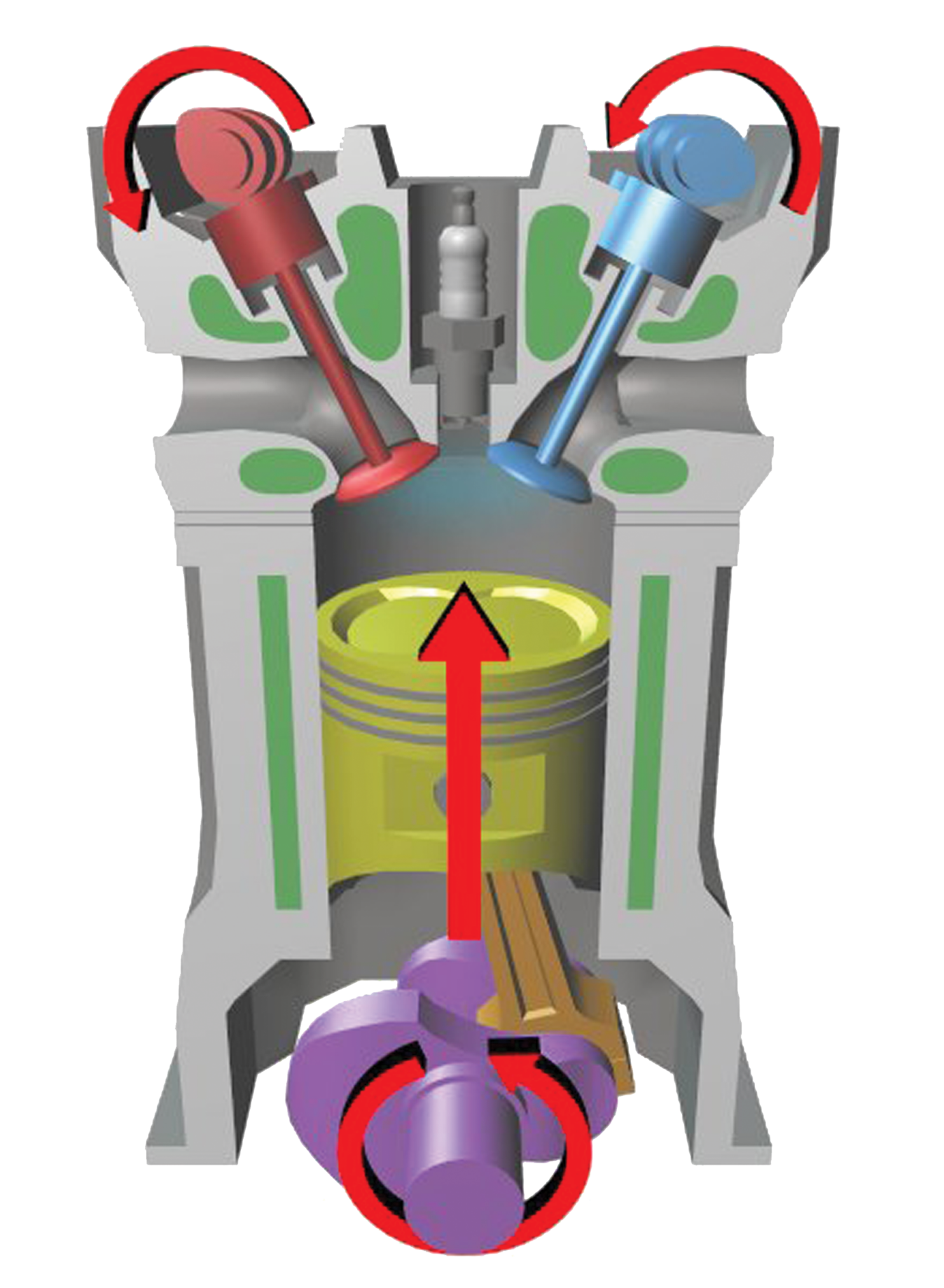
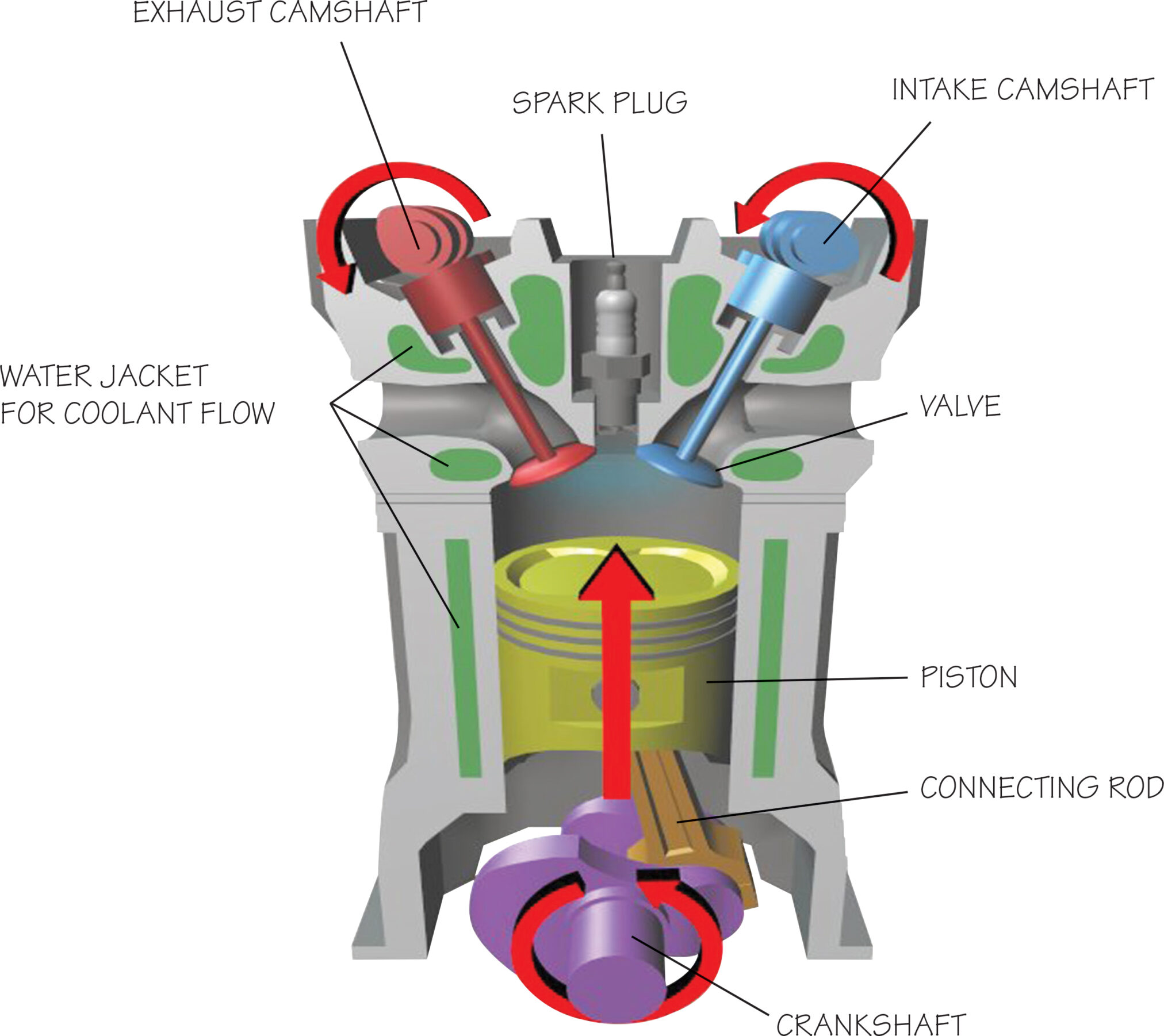
  • Labeled Engine Diagram or other cutaway diagram of a four-stroke internal combustion engine (optional if an actual engine is available)
  • Copy of Unlabeled Engine Diagram for each Explorer
  • Pen or pencil for each Explorer

Advisor Note

Text in italics should be read aloud to participants. As you engage your post in activities each week, please include comments, discussions, and feedback to the group relating to Character, Leadership, and Ethics. These are important attributes that make a difference in the success of youth in the workplace and in life.

Activity 1

Air Force

This activity is intended to get your Explorers engaged and to serve as a lead-in to the main event.


Air Force is a three-part relay race, so divide post members into teams of three. You will need a “lane” that is 12 feet long and 2 feet wide for each team. If you don’t have enough space, simply use a single lane and have each team take a turn and record their times. Place a team member at the starting line, at the 4-foot mark, and at the 8-foot mark of each lane.


Place a marble at the starting line. Give the team member at the 4-foot mark an empty paper towel roll. Give the person at the 8-foot mark a drinking straw. When you say “go,” the first team member will use only their mouth to blow the marble from the starting line to the 4-foot mark. At that point, the second team member will take over. Blowing through only the paper towel roll, that team member must blow the marble to the 8-foot mark. The final team member will then take over and blow the marble across the finish line blowing only through the straw. The team that finishes first (or fastest) wins.
Activity 2

Main Event

Begin the main event by asking these questions:

  • How difficult was it to get your marble from the starting line to the finish line?
  • Were some legs of the race easier than others?
  • What made the difference in the level of difficulty between the different legs?


Try to guide the discussion toward the conclusion that focusing or harnessing energy (wind in this case) can generate more power. In an engine, tight seals, properly sized cylinders, and proper ratios of fuel and oxygen also determine the effectiveness of an engine’s output.


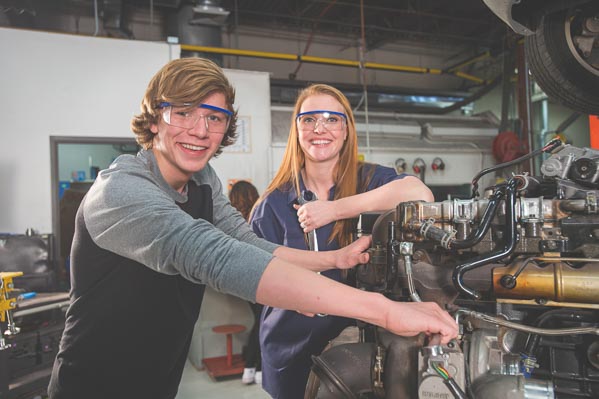
It is important that the Explorers have the opportunity to get their hands dirty and actually experience the workings of an engine. Find ways in which each participant can touch and manipulate the various engine parts.


Ideally you will have an engine block that has been pulled out of a vehicle and can be used as a learning tool. If this isn’t the case, use an engine in a working vehicle or a cutaway picture for demonstration purposes.


If using an actual engine, allow each participant to handle and inspect the various parts. If an engine is not available and you are using the Labeled Engine Diagram, point out and identify each part. Be sure to include the major components such as:


  • Pistons
  • Engine block
  • Cylinder head
  • Cylinder head cover
  • Intake and exhaust manifolds
  • Oil pan
  • Distributor
  • Spark plugs
  • Camshaft and timing belt/chain pulleys


As each part is inspected, discuss its function within the engine. Explain the principles of compression, expansion, ignition, intake, and exhaust so that each participant understands how combustion creates motion.


When you are done, give each participant a copy of the Unlabeled Engine Diagram and have them label it.


If time permits, discuss the differences between a gasoline-powered engine and a diesel engine. Explain that there are other, less common engines such as the Wankel engine.

Reflection

Advisor and Officer review

After the meeting, address the following:

  • Identify what was successful about the meeting.
  • Identify what needed improvement.
  • Schedule an officer and Advisor planning meeting to prepare for the next post meeting or activity.


RESOURCES


Labeled Engine Diagram

(Source: Wikipedia.com)


Unlabeled Engine Diagram

(Source: Wikipedia.com)

Chat Icon
Scoutly Toggle Size Close Chat